Families answer to your questions

We answer all your questions

Below is a list of questions you may have as a parent, about the curriculum, admissions, the specifics of the French education system, how non-French-speaking children are integrated, parent involvement, and more.
1.Admissions and Eligibility

What are the admission and eligibility requirements to enroll at Shanghai French School as an international school?

We welcome students whose parents are legally residing in China and who meet one of the following criteria:
  • Children of all nationalities with at least one parent who is a foreign national, or from Hong Kong, Macao, or Taiwan.
  • Foreign or Chinese children born abroad, in Hong Kong, Macao, or Taiwan, with both parents being Chinese nationals.
If neither of these two conditions is met, families must request a special exemption from the Shanghai Municipal Education Commission (SHMEC) to enroll their child in our school. [Click here.]
Shanghai French School enrolls children whose parents hold valid residence status in Shanghai. Parents are responsible for obtaining all necessary permits from the Chinese authorities and submitting the following documents:
  • Copies of all family members’ passports,
  • For foreign passports: copies of visas or travel documents,
  • One parent’s employment certificate,
  • And the business license of the employer.

Are there any selection criteria, entrance tests, or interviews?

  • Required documents: Academic transcripts from the past two school years, as well as those from the current year, must be submitted. For students entering kindergarten or Grade 1 (CP), a recommendation letter or progress report can also be provided.
  • Entrance test: There is no mandatory entrance test. However, one may be scheduled at LFS if needed, to determine the most appropriate class placement.
  • Interview: Families of non-French-speaking children in early Kindergarten (TPS, PS, MS) or those applying to the FLSco program (starting from GS) will be invited to an interview, either online or on campus, with the Primary Head or Deputy Head of Secondary, and possibly an FLSco teacher. The interview is conducted in French or English and does not require preparation. It’s an opportunity to discuss the family’s educational goals and to explain the key aspects of a French curriculum.
  • Special Streams: For the English European Stream, the American International Stream, or the Chinese International Stream, a good command of French is required. Families will be asked to submit a short video and a written sample (from CE1-Grade 2 onwards) to the Language Department, in order to assess the student’s level in French before considering entry into these streams.

Is there a deadline to apply or a waiting list?

Each year, the application campaign for the upcoming school year opens in early November. From this point, families can submit an enrollment application for their child(ren). Applications remain open until the start of the school year, but we strongly encourage families to apply early, especially for high-demand levels such as CP (Grade 1).
For non-French-speaking students who may require support through the FLSco program, places may be limited at certain grade levels. In this case, students may be placed on a waiting list. A place is only secured once the family has accepted the offer made by the admissions office.

Are scholarships available, and if so, what are the eligibility criteria?

The French government, through the AEFE (Agency for French Education Abroad), may provide financial aid in the form of scholarships for French nationals whose families have limited financial resources and cannot fully cover tuition fees.
These scholarships may partially reduce tuition fees, depending on the family’s financial situation and the annual budget allocated to the AEFE. Scholarships are not automatically granted—they are awarded after a thorough review of the family’s financial status and are subject to eligibility criteria.
There are two scholarship application periods each year (January and July), managed directly by the Consulate General of France in Shanghai. Full information, including application requirements and eligibility details, is published during each campaign on the Consulate’s website.

What is the minimum age for admission to TPS and PS (kindergarten first 2 levels)?

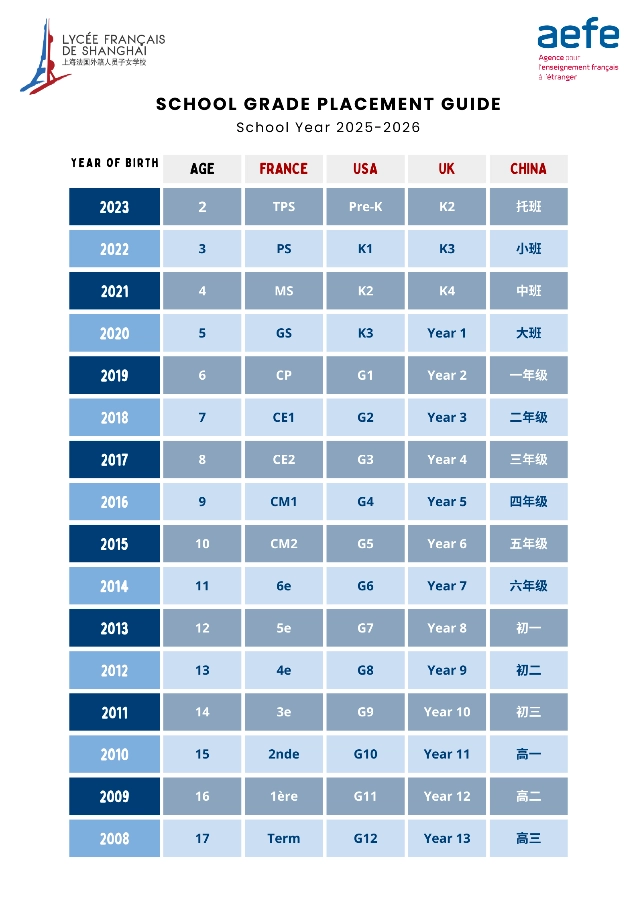
For TPS (Pre-K), children must be at least 2 years old on the first day of school. For PS (K1), children must be turning 3 years old during the calendar year they begin school.

Are tuition discounts available for second children?

Our tuition fees are carefully calculated to maintain a balanced budget while providing high-quality education for all. Rather than offering targeted discounts, we have chosen to apply a single, transparent tuition rate for every family to ensure fairness and equity.
We do not offer sibling discounts. However, French families in need of financial support are encouraged to apply for assistance through the Consulate. For more information, please contact the consular services directly.

Is there a guaranteed transfer pathway to other AEFE network schools?

Shanghai French School is part of the AEFE network, a global network of 580 French schools across 139 countries (as of 2024), educating over 391,000 students, one third of whom are French nationals, the rest from other countries.
This network offers families the advantage of continuity in education within a consistent system, with shared curricula and similar language streams across schools.
That said,each AEFE school has its own admissions policy, even within the network. It is important to contact the destination school directly to confirm the admissions process. However, students transferring from another AEFE school are typically given priority.
2. Curriculum and academic questions

What curriculum does Shanghai French School offer, and what kind of studies does it lead to?

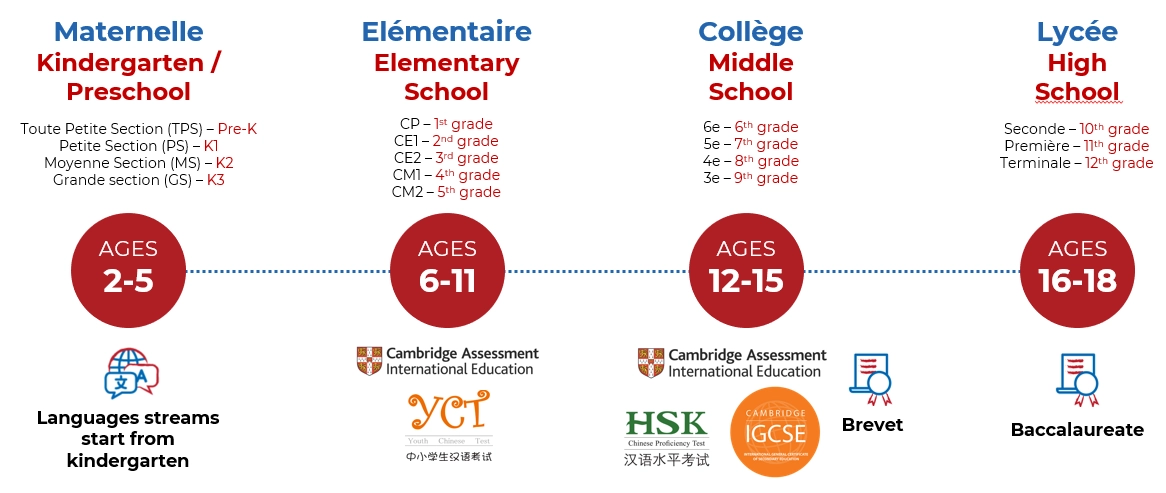
We offer a structured academic path from kindergarten to the final year of high school (12th grade), following the official French National Education curriculum:

Our program is enriched with ambitious language and cultural tracks. It is rooted in the humanistic values of French education and allows each student to develop multilingual and multicultural skills through language streams adapted to their level and goals:
  • General Stream: Focused on building strong proficiency in French, while also learning English and Chinese in leveled groups.
  • English European Stream (SEA): Designed to deepen understanding of English language and Anglo-Saxon culture.
  • American International Stream (SIA): Aims for native-level English proficiency, with dedicated courses aligned with international standards.
  • Chinese International Stream (SIC): Offers in-depth teaching of Chinese language, literature, and math.
  • Chinese Oriental Stream (SOC): Open from Grade 10 (Seconde) for students with strong Chinese proficiency. It allows for deeper exploration of Chinese culture and current global issues in the Chinese-speaking world.
With a 100% success rate in both the Diplôme National du Brevet (end of middle school diploma) and the French Baccalaureate (end of high school diploma), LFS prepares students to pursue higher education at top universities and elite schools worldwide, not just in France. The French Baccalaureate is also recognized by Anglo-Saxon and international education systems.

What are the differences between the IB, AP, A-Levels, and the French Baccalaureate?

Like the IB, AP, or A-Levels, the French Baccalaureate is internationally respected for its academic rigor and depth of theoretical knowledge. All of these systems provide a strong intellectual foundation and allow students to gradually specialize in their areas of interest. But here’s what makes the French Baccalaureate unique:
  • It offers a balanced and comprehensive education, blending general subjects with electives tailored to each student’s strengths.
  • Unlike IB or A-Levels, which allow early specialization, the French system maintains a broader approach, preparing students with greater flexibility for higher education.
  • Academic consistency and regular effort are key: the French system values steady work habits and the ability to revise and retain knowledge over time.
  • At LFS, students must master three languages, whereas the IB generally requires two (usually one native and one foreign language).
  • The French Baccalaureate is standardized across all schools that offer it, ensuring continuity for students even if they move countries or schools. In contrast, IB programs may vary significantly from one school to another.
In terms of workload and expectations, the French Baccalaureate is on par with the IB, AP, or A-Level systems, with a demanding final exam structure.
The French International Baccalaureate (BFI): an option at LFS
The BFI is available to students enrolled in either the American (SIA) or Chinese (SIC) international Streams. It includes an enhanced curriculum, with key subjects like language and literature, history-geography, or global studies taught in English or Chinese. Additional courses throughout the year help prepare students for exams in the target language, ensuring success within their international track.

What does a typical school schedule look like at LFS?

Kindergarten & Primary School
  • Monday, Tuesday, Thursday: 8:00 AM – 3:00 PM
  • Wednesday & Friday: 8:00 AM – 12:00 PM
Middle & High School (Collège & Lycée)
  • Monday to Friday: 8:00 AM – 6:30 PM
Lunch Breaks
  • Primary: 1 hour between 11:00 AM and 12:00 PM
  • Secondary: Varies between 12:00 PM and 2:00 PM depending on the class schedule
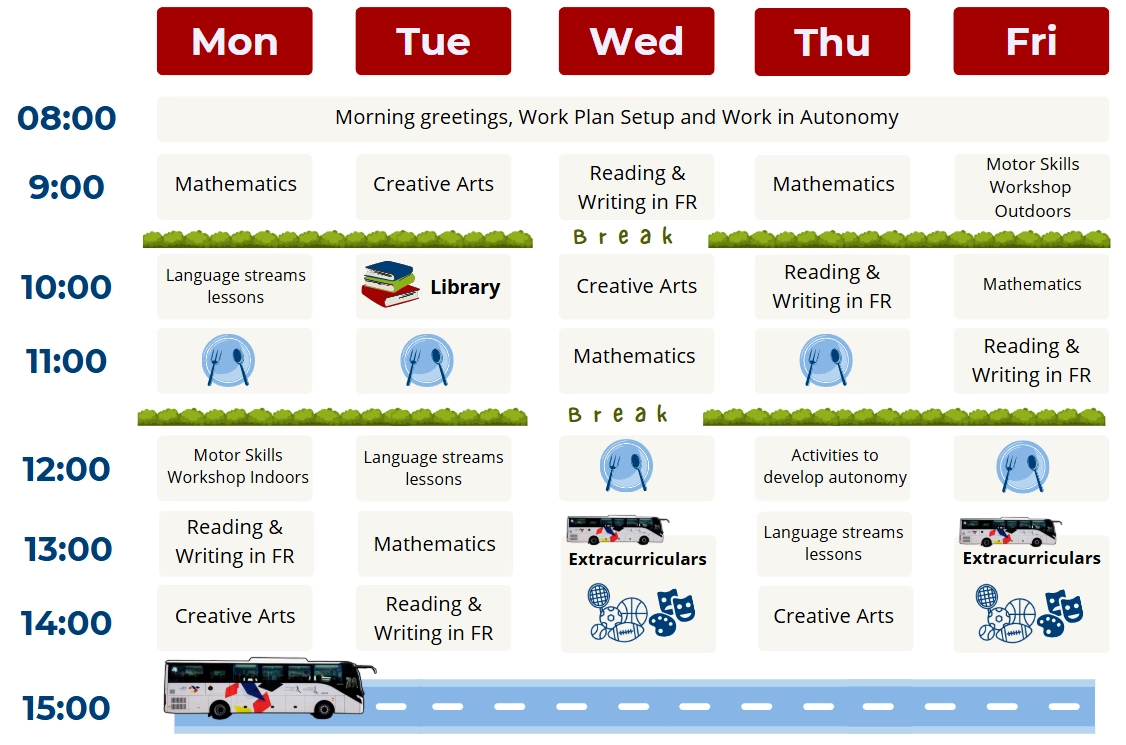
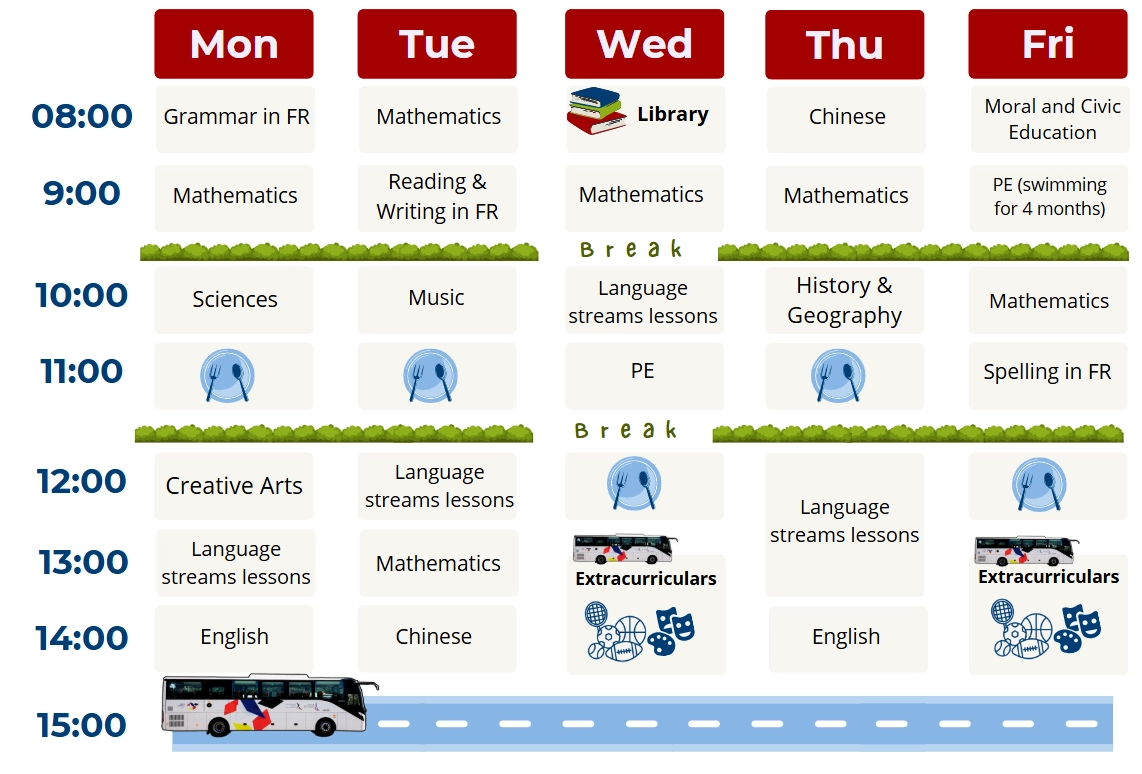
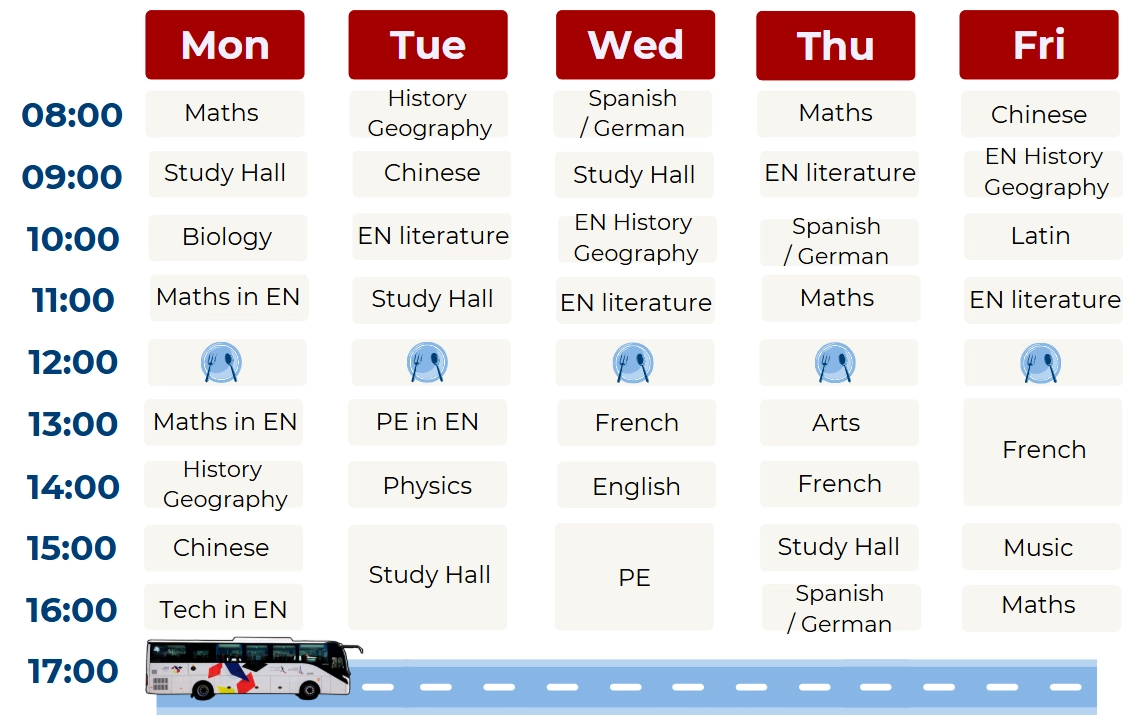
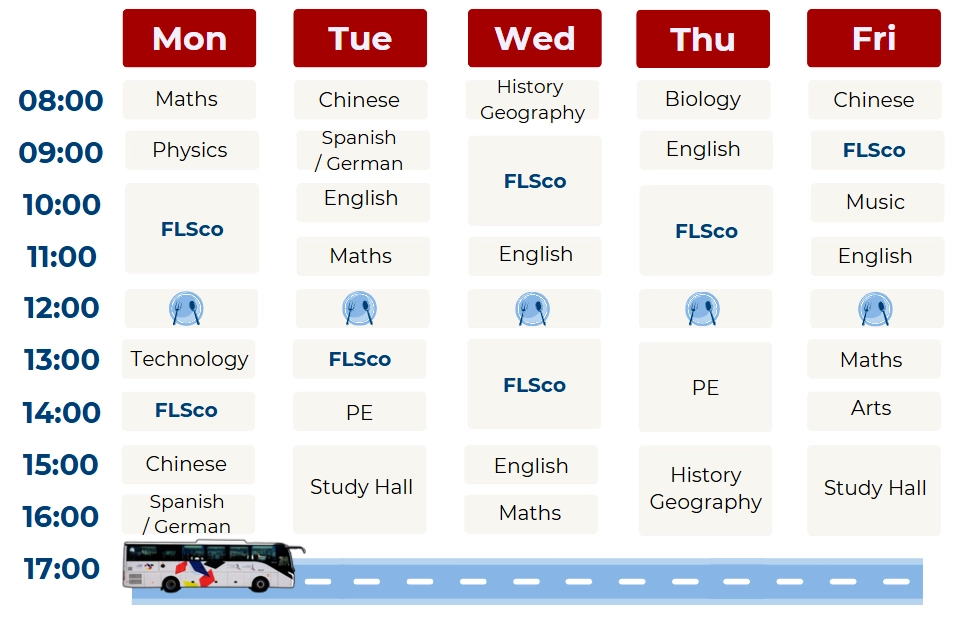
Sample timetables for each level (kindergarten, primary, middle school, including specific language streams and FLSco) are available below:
Sample timetable for kindergarten:

Sample timetable for primary school:

Sample timetable for middle school (example from a 7th grade student in the American International Stream):

Sample timetable for middle school (example from a 7th grade student following the FLSco program for non-French speaking children):

What is the FLSco program (French as the Language of Instruction), and up to what age can non-French-speaking children join?

The FLSco program starts in Grande Section (K3). While non-French-speaking students can join Shanghai French School at any grade level, we recommend beginning the integration process as early as possible for a smoother academic journey.
In general, the age limit for joining the French system without prior French experience is around 15 years old, which corresponds to Grade 9 (3ème), the final year of middle school. The admissions process includes a meeting between the family and school leadership to better understand the child’s background and ensure the best chance of success.

What are your students’ outcomes in terms of university admissions?

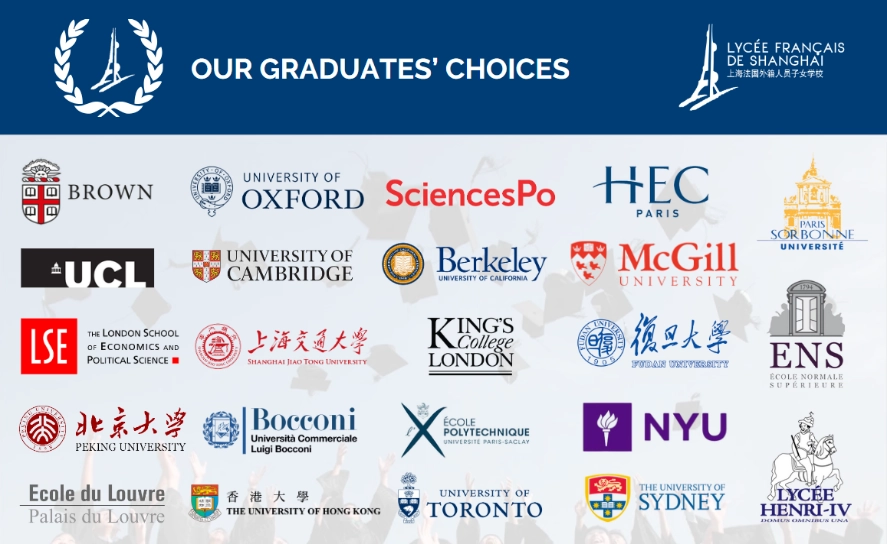
Our students consistently achieve excellent results in university admissions. On average, 55% pursue studies in France and 45% abroad (outside of France). They gain acceptance into top-tier institutions such as McGill, Sciences Po, UCL, LSE, Sorbonne University, Oxford, and many others (see full list in the document).

They go on to study a wide range of fields including: Sciences, Engineering, French preparatory classes (prépas), Social sciences and humanities, Law, Psychology, Business and management, Communication, Art and design, Medicine, Hospitality management.
LFS has also formed partnerships with several universities and schools to support student exchanges and facilitate admissions.

Are there career counselors who provide personalized guidance?

Yes, and they’re a key reason behind our students’ excellent placement records. Our college counseling team provides individual guidance and regular support across both Qingpu and Yangpu campuses.
In middle school, students are introduced to career paths through hands-on projects and themed weeks (career fairs, science week, gender equality initiatives, etc.).
In high school, students receive in-depth support, including:
Personalized advisory sessions (from Grade 10 onwards):
  • Workshops on careers and higher education
  • Information sessions on Bac electives and post-Bac options (Jan–Mar)
  • Prep for internships and work discovery (Mar–Apr)
  • Development of personalized academic plans (May–June)
Special events and resources:
  • Career fair
  • University fair with over 80 institutions from France and abroad
  • Thematic conferences with guest speakers
Internship placements:
  • Job shadowing in Grade 10 (2 weeks in June)
  • Company visits in Grade 11
  • Mock interviews for Grade 11 & 12 students
Tailored support for international applications:
  • Individual academic assessments
  • Guidance with Parcoursup (French platform) and international applications
Assistance for non-French students applying to elite programs such as the AEFE Major Scholarship
This comprehensive, step-by-step guidance helps each student build a solid and personalized academic plan that matches their aspirations.

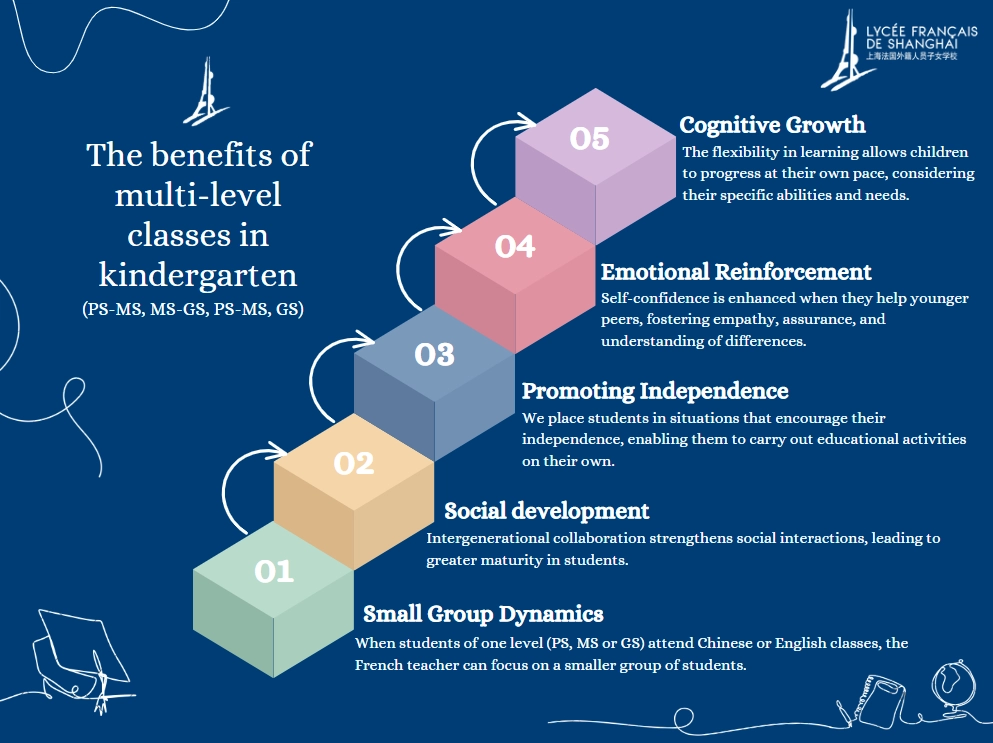
How do multi-level kindergarten classes work?

How do multi-level kindergarten classes work?
At Shanghai French School, we use multi-level classes mainly in kindergarten, a common structure within the French national education system. These classes bring together students of different ages and levels, and offer numerous educational benefits, including peer learning, social development, and a more flexible, personalized approach to instruction.

What textbooks are used by subject and grade level? What is taught?

We follow the guidelines of the official French curriculum to ensure that each student masters 100% of the expected competencies by the end of each grade level. To support this, our teachers use a variety of up-to-date textbooks imported from France and design additional exercises tailored to student needs.
Thanks to their expertise, teachers select the most relevant exercises to develop required skills, while adapting to the specific profiles of their students. This differentiated instruction allows them to adjust tasks and instructions based on individual needs, while maintaining shared learning objectives.
Teachers within the same grade level collaborate closely to ensure consistent progression across classes, while also personalizing their approach. In subjects like mathematics, teachers often supplement textbooks with more advanced or adapted activities to support FLSco students and those needing extra help.

What levels do students reach in Chinese and English?

In English, students have the opportunity to take the SAT (Scholastic Assessment Test) directly on our campus, an exam required for entry into American universities. Though still relatively rare in China, the SAT plays a crucial role in U.S. college admissions. In recent years, our students have achieved impressive scores ranging from 1300 to 1550, out of a possible 1600. For comparison, Ivy League schools like Princeton, Columbia, and Brown typically expect a minimum of 1480–1500, a range well within reach for our students.
In Chinese, students in primary school take the YCT exam, while secondary students sit the HSK, a well-known benchmark for Chinese language proficiency. Achieving the top HSK levels requires not only fluency in spoken Chinese but also a strong command of written language and advanced vocabulary. Recently, nearly 230 secondary students have met this challenge successfully, reaching the prestigious HSK Levels 5 and 6, an award reserved for the most advanced learners of Chinese.

Are there leveled groups for language instruction?

Outside of specific language streams, we ensure that language instruction is adapted to each student’s proficiency level, starting from primary school.
  • In primary school, Chinese is taught in leveled groups to meet the diverse needs of students, from complete beginners to native speakers. For English, students currently follow a shared core curriculum, with some individual adjustments to support varying levels.
  • From secondary school onward, students choose different language tracks, and we offer 3 to 4 proficiency groups in both English and Chinese to better address the range of levels.
This structure guarantees that each student receives instruction tailored to their language skills—whatever their background.

What language do students speak among themselves at LFS?

At Shanghai French School, students speak French, Chinese, and English across all grade levels. In the early years, children tend to speak in the language they, or their friends, are most comfortable with, whether that’s French, Chinese, or English.

Are students exposed to screens? Do they use computers and iPads?

Yes, but in a controlled and educational way. The French national curriculum includes mandatory digital literacy training, emphasizing responsible and pedagogical use of screens.
  • In kindergarten and primary, screen time is limited and supervised. For example, in early kindergarten, students may take photos of their work; in Grade 5 (CM2), they might do dictation or exercises on tablets. Homework involving screens, such as online oral revision, is limited to 15 minutes. Students also learn about social media safety and responsible digital behavior.
  • In secondary school, screens are more deeply integrated into learning. Technology and math classes use various digital tools, and some subjects use artificial intelligence to analyze texts or boost creativity. Presentations are often done using PowerPoint and other digital formats. The curriculum also includes online safety and coding activities through classroom projects and extracurricular workshops.

What are the key events that shape the school year at Shanghai French School?

The school year is filled with memorable events that bring the community together and create lasting memories for students.
Festive highlights include Halloween, Christmas, Chinese New Year, Carnival, International Day, and Europe Day. More formal events include November 11th Remembrance Day and end-of-year graduation ceremonies for students completing the Brevet and Baccalaureate. And of course, the school fair is a not-to-be-missed celebration every year!
LFS also maintains a close relationship with the Consulate General of France, which supports major events hosted at Villa Basset, such as the November 11 ceremony, Bac honors recognition, and choir concerts.
Throughout the year, we regularly welcome inspiring guest speakers, including ambassadors, senators, consuls, authors (like David Foenkinos), top athletes (Tony Parker, Lilian Thuram, Cai Yun), and digital leaders like Hugo Décrypte. These encounters spark curiosity and broaden students’ perspectives.

How does grading work at Shanghai French School?

In primary and middle school, evaluations do not rely on numerical grades but instead use a clear, color-coded system:
  • 🔴 Red: Not yet acquired
  • 🟡 Yellow: Partially acquired
  • 🟢 Light green: Acquired
  • 🟢 Dark green: Exceeds expectations
This system encourages students to focus on understanding, rather than just scores. It highlights their progress, acknowledges success, and clearly identifies areas for improvement. A yellow grade does not mean failure, it’s simply a prompt for extra attention. A dark green grade rewards students who go beyond expectations.
Starting in high school, students transition to a standard 0–20 grading scale, aligned with the Baccalaureate and recognized by universities.
Parent testimonial:
“At first, we were a bit confused by this color system, we were used to traditional grades. But after speaking with the teachers, we realized it’s a real support tool. When our daughter receives a yellow grade, we know exactly where to help her. It’s reassuring and clear.”

What does LFS do to support student well-being?

Student well-being is a top priority at Shanghai French School, as it is closely linked to academic success and personal development. We have several initiatives to create a healthy and supportive learning environment:
  • An anonymous drop box allows students to express concerns.
  • Trained peer mediators step in to help resolve conflicts.
  • Anti-bullying ambassadors (volunteer students) promote respect and solidarity.
  • A year-round anti-bullying awareness program emphasizes empathy and kindness.
  • Emotion management workshops, led by professionals, help students better understand and regulate their feelings.
We also have a dedicated student support network, made up of school psychologists, academic counselors, school doctors, mediators, and special education teachers. This multidisciplinary team works together to identify individual needs, provide personalized solutions, and offer preventive or corrective support for emotional, social, or academic challenges.
This coordinated approach ensures that every student receives the guidance and care they need to thrive in a safe, respectful environment.

What measures are in place for students with special needs?

We are committed to providing personalized support to help students with special needs reach their full potential. Each student receives 72 hours per year (around 2 hours per week) of personalized instruction, scheduled separately from regular class time, to reinforce core skills and learning methods.
Depending on their needs, we implement individual action plans, including:
  • PPRE (Personalized Academic Success Plan): Targets a specific skill or challenge (writing, speaking, behavior, concentration) over 5–7 weeks.
  • PAP (Personalized Support Plan): Designed for students with learning disorders (e.g., dyslexia, dyspraxia), with accommodations such as extended test time or adjusted homework.
  • PAI (Individual Health Plan): For students with chronic illnesses or allergies, ensuring their medical needs are addressed in the school setting.
  • PPS (Personalized Schooling Plan): For students with disabilities, offering tailored support and accommodations to ensure full inclusion.
These programs ensure that every student, regardless of need, receives the support necessary for both academic and personal growth.

Are there field trips and school outings during the year?

Yes! Every grade level enjoys at least one trip or outing each year. These range from museum visits in Shanghai, farm trips, and historic neighborhood tours, to overnight stays in the Shanghai region or even week-long educational trips to other parts of China.
We also take part in the ADN-AEFE exchange program, which offers students a chance to experience school life in another AEFE institution in France or elsewhere in the world. This program fosters cultural openness, independence, and a strong sense of belonging to the global French education network.
Thanks to extracurricular activities, many students also have the chance to travel across the Asia-Pacific region for high-level sports competitions—football in Bangkok, dance in Singapore, basketball in Phnom Penh, volleyball in Kuala Lumpur, and more.
3. Extracurricular Activities

How does the extracurricular activity program work?

Please refer to the dedicated page for sports and cultural activities (that we call “ASC”) on the school website: https://www.lyceeshanghai.cn/asc-sports-culture/

How does after-school care work for kindergarten children at LFS?

Starting from the 2024–2025 school year, Shanghai French School offers after-school care until 5:00 PM for kindergarten children (PS, MS, GS). This new service was created to meet the needs of families by providing flexible, high-quality childcare, in line with our commitment to educational excellence and strong community support.
With this program, LFS:
  • Provides a caring and structured environment where young children can thrive in a familiar and safe space.
  • Supports working families by offering flexible options that help parents better manage their work schedules—without added stress.
Families can choose between two options:
  • 3 days per week
  • 5 days per week

What opportunities do students have to express themselves, get involved, and develop their talents beyond academics?

Our students are encouraged to take on active roles in school life through numerous engagement opportunities integrated directly into the curriculum. They can serve as:
  • Class representatives
  • Eco-delegates
  • Members of the Middle School or High School Student Council (CVC/CVL)
  • Leaders in the Maison des Lycéens (MDL), helping organize events
Students can also support their peers through peer mentoring programs.
Many student-led clubs give them the chance to build leadership and collaboration skills. Clubs range from chess, magic, gardening, math, music, and history, to more specialized groups like Rotary Interact and our very own Female Lead Society.
The school’s educational approach is designed to support holistic development, nurturing not only academic success but also social, emotional, and creative growth—what we often call soft skills.
Projects like middle school theater, living museums, and English-language debates help students develop their voice, critical thinking, and confidence. The LFS choirs offer powerful collective experiences, performing at major events such as the Christmas celebration with the French Chamber of Commerce and official ceremonies hosted by the Consulate.
In addition, students can participate in large-scale international projects like:
  • Model United Nations (MUN)
  • Young Ambassadors (public speaking competition)
  • Coding Night (coding challenge)
  • Math.En.Jeans (scientific research program)
They can also join the Orchestra and Choir of French Schools Worldwide or contribute to solidarity projects like charity races and fundraising spelling bees.
All of these activities are integrated into the school day and supported by dedicated teachers, offering students meaningful, real-world learning experiences grounded in today’s global context.

Are there camps during school holidays?

Yes, we offer sports, language, and cultural camps during certain school breaks, in November, April, and summer, on our campuses and in France. These camps are open to LFS students and are designed to combine fun, learning, and personal growth during the holidays.
4. Facilities, Human Resources, and Transportation

What is the difference between the Qingpu and Yangpu campuses?

Shanghai French School guarantees the same educational experience on both campuses, Qingpu and Yangpu, thanks to full alignment in academic programs, language streams, and quality standards.
Teachers use identical teaching resources to ensure continuity in learning, regardless of campus. Facilities, whether sports areas, libraries, or science labs, are modern and meet the same high standards.
Extracurricular activities (ASC), services like the canteen and transportation, and the school’s core values are all consistent across both sites, reflecting our commitment to providing excellence in education everywhere.

How many students and teachers are there per class?

The number of classes per grade varies, typically between 2 to 4 classes depending on demand. Class sizes also vary:
  • In Primary school, the average is around 20 students per class, but students are often split into smaller groups, especially in language streams and FLSco classes.
  • The teacher-to-student ratio is 1:6 in kindergarten and 1:9 in Primary.
  • In Secondary school, class sizes vary more but generally include about 20 students per class.

How are teachers selected and trained?

We currently have 180 passionate teachers representing 13 nationalities, including France, the United States, the UK, Canada, Germany, India, Brazil, and more. With an average of 12 years of experience, many have lived and worked abroad, bringing rich international perspectives into the classroom.
Our teachers are not only subject-matter experts but also deeply engaged in managing projects and student initiatives. For our language streams, we recruit only native speakers to ensure full immersion and authenticity.
Throughout the school year, all teachers—across both campuses and all levels—benefit from a wide range of professional development opportunities. In 2025, some of the key training sessions included:
  • Cognitive science and classroom strategies: Applying neuroscience to improve memory, attention, and student motivation.
  • Anti-bullying training: Based on the “shared concern” method, in partnership with the ReSIS Center (a French institute specializing in anti-bullying systems).
  • Artificial intelligence in education: Exploring how AI can support classroom instruction, revision, and personalized learning.
  • Supporting students with special needs: Training on identifying learning difficulties and adapting teaching practices accordingly.
  • And more.
Another hallmark of the French system: students are supported by a comprehensive educational team that goes beyond the classroom. They are surrounded by trusted adults who work closely with families.
The language team, whether in international streams or FLSco, creates individualized learning paths, helping each student grow with confidence. Our health team, which includes school nurses and two psychologists, ensures careful, confidential, and personalized support.
A unique feature of French schools is the “vie scolaire” (student life team), a dedicated group that supervises students outside class hours, promotes well-being, supports positive behavior, and serves as a bridge between teachers, leadership, and families.

What is the closest bus stop to my home?

For all transportation-related questions, please visit the dedicated Transportation page on our website: https://www.lyceeshanghai.cn/transport/
This page includes a map of the 300 gathering points covered by our 80 bus lines, which reach all areas of Shanghai. Routes and stops are reviewed and optimized each summer, based on family feedback collected in early June and in coordination with Shanghai traffic police regulations.

How does the partnership with the German School (DSS) work?

Openness, tolerance, and solidarity, these are the shared values that have shaped the partnership between LFS and DSS since 1996. Together, we share two Eurocampuses, bringing together over 60+ nationalities to deliver the best of European education in Shanghai.
Although each school follows its own national curriculum, there are many opportunities for cooperation and shared experiences. LFS and DSS share facilities on both campuses, such as the sports center, canteen, and bus services. Throughout the year, numerous joint activities give students and families from both schools the chance to connect and celebrate: Christmas celebrations, the Family Christmas Market, Franco-German parent clubs, the Franco-German orchestra, Eurocampus fun runs, Elysée Treaty commemorations, Franco-German Week, a student exchange week in Grade 10, the Euroball for middle schoolers, as well as sports tournaments and chess competitions.
These shared events make our Eurocampuses unique learning environments in Shanghai, bringing European values to life through collaboration, culture, and community.
5. Parent Communication and Participation

How does communication between parents and teachers work, and in what language?

At Shanghai French School, communication between parents and teachers relies on several channels to ensure smooth, accessible information flow. Email is the main tool for formal exchanges, allowing parents to reach out to teachers directly and get personalized updates on their child’s progress.
In Primary School, the Seesaw app is used to share student work, academic progress, and key messages, making it easier for parents to stay involved in day-to-day learning. Starting from Elementary, Pronote (available in multiple languages) becomes the go-to platform for tracking grades, schedules, and absences.
Most communication in French are translated into English when needed to ensure all families understand the information, regardless of their language background.
Several times a year, parent-teacher conferences offer dedicated opportunities to meet with teachers. Outside these moments, parents can also request an individual appointment at any time during the year.

What types of families are enrolled at LFS?

With nearly 1,500 students from over 45 countries (and 60 countries if we count families’ origins), we proudly celebrate our diversity. Our school is home to French, Franco-Chinese, and international families (who make up nearly 40% of our community). Each family brings its own cultural richness and perspective, helping create a vibrant, inclusive learning environment.
Diversity is at the heart of our educational mission, it enriches classroom discussions, fosters curiosity, and equips students with intercultural skills essential for life in a globalized world. Whether through languages, traditions, or educational approaches, every family and student contributes to building a school culture rooted in mutual respect and open-mindedness.

Can parents access the campus freely?

Parents at Shanghai French School have free access to both Qingpu and Yangpu campuses from 3:00 PM to 5:00 PM, Monday to Friday. This initiative aims to strengthen the school’s community ties by allowing families to spend time on campus outside of formal events or meetings.
Access requires prior registration through a campus-specific badge request form (Yangpu Form / Qingpu Form). Once on site, parents are allowed in designated areas only, such as the piazza and lost-and-found zone.
We kindly ask all parents to respect school rules, including:
  • No photography
  • Staying within authorized areas
  • Respecting the posted hours
In addition to these daily access slots, parents are invited to join campus events throughout the year, such as:
Monthly access to the pool on weekends, weekend celebrations (Christmas Market, International Day, Flea Market, ASC Showcase, School Fair), student competitions, Swim Night, and academic showcases (Christmas concerts, 5th-graders Living Museum, 4th-graders Poetry Day, etc.).

How is bullying addressed at LFS?

Here, anti-bullying prevention is a top priority, with the entire educational community actively involved.
From Primary School onward, age-appropriate awareness programs are led by both teachers and the student life team. These initiatives encourage respectful behavior and teach students peaceful ways to resolve conflict.
One key initiative is Anti-Bullying Week, launched with a school-wide assembly and the introduction of the Blue Mailbox, a tool that lets students report concerns anonymously and confidentially. Additionally, students can report bullying through the SOS function on Pronote, accessible anytime, anywhere.
LFS also implements the Safe Zone program from the French Ministry of Education, offering students a trusted space and listening network. This system is reinforced by trained student ambassadors from Secondary School who serve as mediators and reference points in promoting a caring, inclusive environment.
Both Primary and Secondary students take part in awareness activities such as making badges and creating bookmarks to show their commitment.
In Middle and High School, the CVC (Middle School Council) and CVL (High School Council) play an active role in organizing campaigns and prevention efforts in collaboration with school staff. A questionnaire inspired by national guidelines is also distributed to collect anonymous student feedback about bullying in their classes.
Peer mediation is also encouraged as a way to address conflict constructively.
At LFS, bullying prevention is approached in a comprehensive, proactive way, involving students, staff, and families alike. We aim to give students the tools to act responsibly and support one another. Initiatives like the Parents’ Coffee Meetups and participation in the national “Non au Harcèlement” (No to Bullying) competition further strengthen this community-wide commitment.

How can parents get involved in school life?

Parents play a key role at Shanghai French School and are encouraged to participate in a variety of ways to support our educational mission.
They can contribute through formal parent representation bodies such as the Board of Directors, which oversees school governance, or the CVC/CVL, where they can share ideas and express concerns about student life.
Parents can also serve as class representatives starting in Middle School or join specialized committees, on transport, meals, school trips, extracurricular activities, and more, to maintain open dialogue between families, administration, and teaching staff.
There are also many volunteering opportunities, such as helping younger students during lunch or joining the Parent Animation Team, which organizes a wide range of community events.
📎 Read summaries of parent council meetings here: https://www.lyceeshanghai.cn/comptes-rendus-de-nos-instances/
🌐 Discover all the ways you can get involved as a parent volunteer: https://www.lyceeshanghai.cn/les-parents-volontaires/

What kinds of programs are available for parents at LFS?

At Shanghai French School, parents are not just observers, they are active members of the school community. We offer several resources to help them stay engaged and supported:
  • Parenting workshops several times a year, led by internal and external experts, on topics like screen time, academic support, and more.
  • Parent Coffee Mornings, held regularly, provide informal opportunities to speak with the educational team about important topics like bullying, health and hygiene, or social dynamics at school.
  • Weekly French classes for non-French-speaking parents, attended by over 100 parents, to help them better understand their child’s education and integrate into school life.

Apply for admission