

Choose French education

Discover the French Curriculum

Our campuses are expertly designed to support every stage of a child’s development, from age 2 to 18. With dedicated areas for each age and early primary students, we offer a tailored environment that evolves with your child, ensuring they thrive at every age
Welcome to our little kindergarten world!
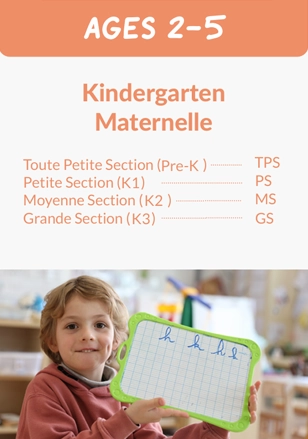
Kindergarten at Shanghai French School is a crucial step in both social and academic development. Learning is trilingual from K3 (GS), with a combination of play-based and structured activities designed to build early literacy, numeracy, and motor skills.
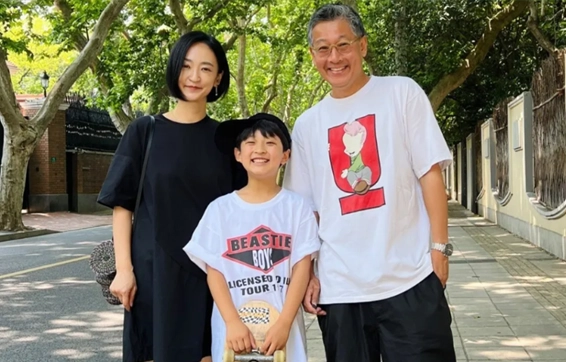
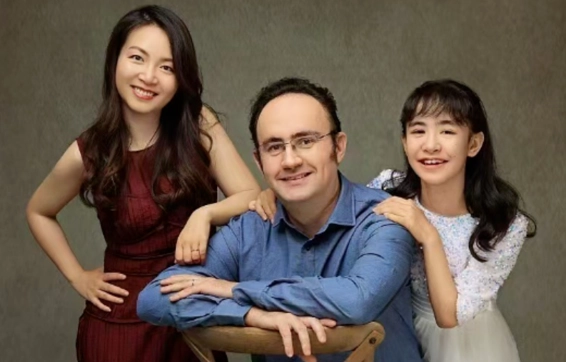
”Theodore always came home happy and excited to talk about what he learned.”
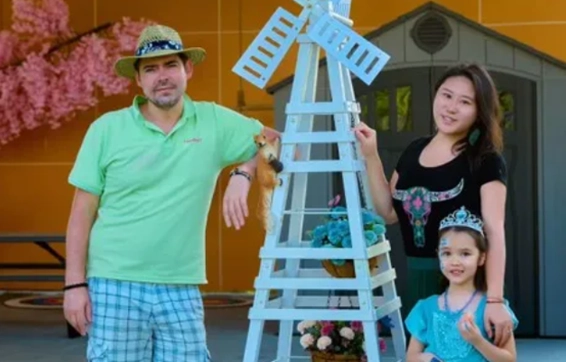
“Isabelle really enjoys her school life and is becoming more and more cheerful and happy!”
Classroom & Teaching Organization
Each class has one main teacher and specialized native-speaker language teachers. Our Kindergarten area is designed for young learners, featuring motor skills zones, outdoor play spaces, creative areas, and nap spaces.
Development Goals
We focus on five key developmental areas to help children grow into confident, curious, and socially engaged learners.
1. Plurilanguage – Express yourself and learn school and daily vocabulary, gradually progressing toward specialized language streams.
2. Physical Activities – Learn how to move your body and develop fine motor skills through mini games, mini-sports, and dance.
3. Artistic Activities – Learn how to create and build, understand which tools can be used, and how to hold them properly.
4. Structured Thinking – Learn to follow guidelines, build self-confidence, work on logic, and understand basic principles of quantities.
5. Exploring – Discover the world, improve focus, and develop social relationships.
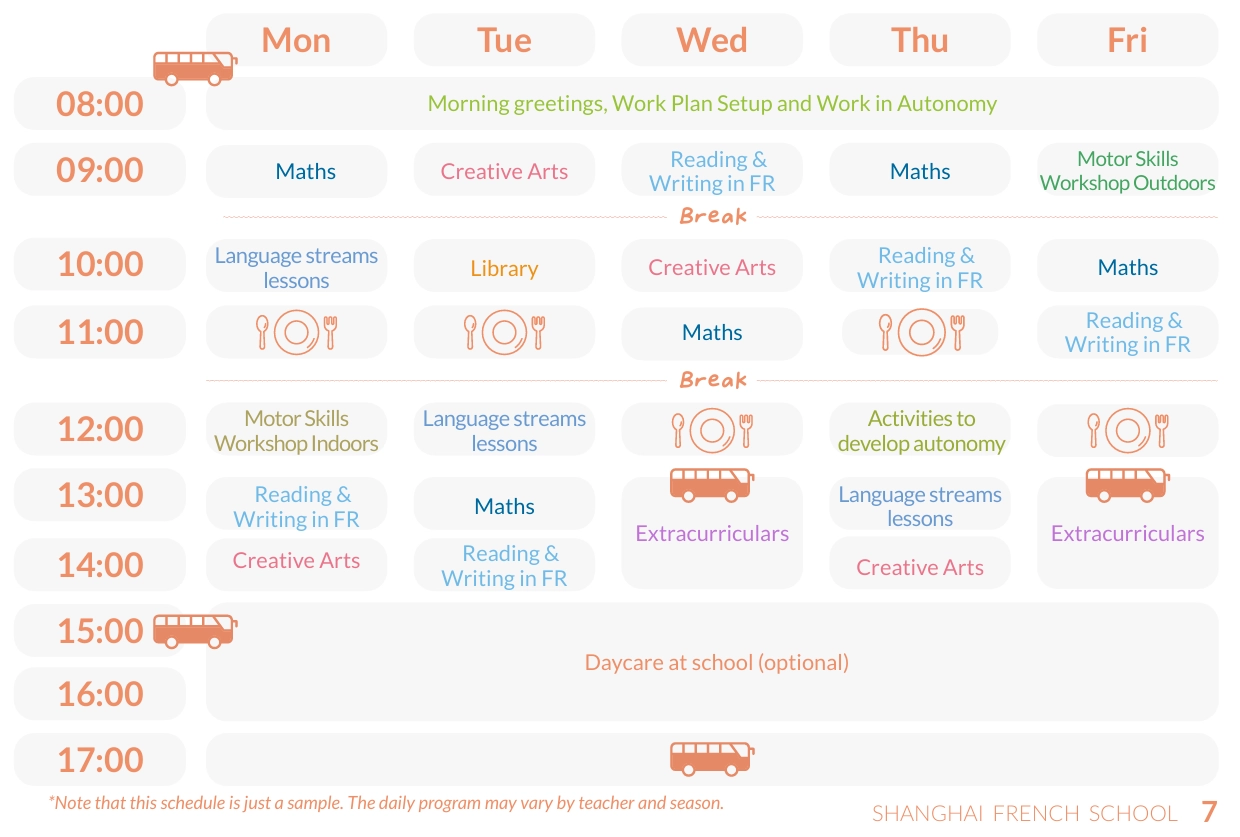
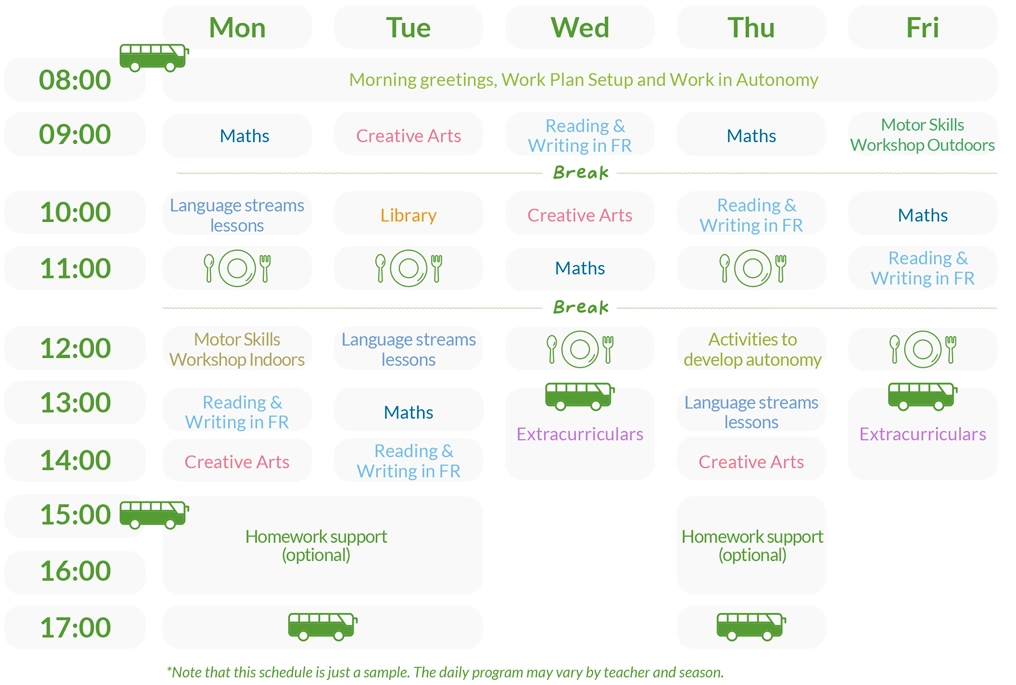
Sample Schedule for Kindergarten
• Pre-K and K1 have nap time after lunch.
• School buses are available on Wednesdays and Fridays after lunch for children not in the extracurricular program.
• In Kindergarten, we don’t divide the day into rigid blocks like “Math” or “Reading.” Instead, our teachers design engaging, hands-on activities that naturally integrate multiple skills.
• For example, during an arts and crafts session in English, children might create a bracelet where they change colors every two beads—this reinforces numeracy, memory, and language skills simultaneously
Dive into the LFS kindergarten
world in one video:

Welcome to Elementary School
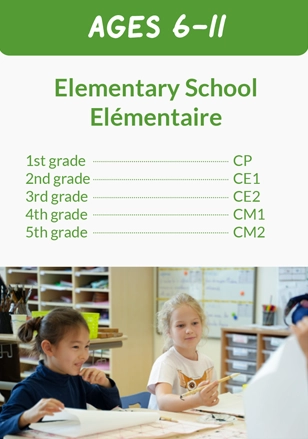
Elementary school marks the beginning of formal reading and writing, while opening the door to exciting subjects such as science, history, and the arts. At LFS, our trilingual approach ensures a balanced and well-rounded education from the very start.
“Now Hibiki is super comfortable at school and even speaks like a French kid, with that little “attitude”!”
“Between sports, competitions, school events, and class outings, it’s a full and vibrant life for Emeline at LFS.”
Classroom & Teaching Organization
Each class has one main teacher and section teachers for languages.
Lessons are structured to help students grasp key concepts and articulate them confidently.
Screen use is carefully supervised, with occasional educational activities such as digital dictations in grade 5.
Development Goals
Focus on Language Mastery
• French language at the core to develop strong reading and writing skills
• Connection-making between subjects through language
• Basic learning activities with rational explanations
• Key activities: Memorization, automatic skills practice, comprehension
• Gradual transition to more complex knowledge
• Development of critical thinking
Reinforcement of Core Knowledge
• Strengthen notions in:
French
Mathematics
Art
Physical Education
• Introduction to Specialized Knowledge:
History and Geography
Science and Technology
• Skills Development:
Abstract thinking
Structuring and producing thoughts
Adapting to academic methods and approaches
Sample Schedule for Elementary School
In our elementary school curriculum, the distribution of subjects is carefully balanced to ensure a well-rounded education. While there are slight variations from one grade to another, the approximate proportion of each subject is as follows:
• Languages (including French and foreign languages) – 34%
• Mathematics & Sciences – 27%
• Reading & Writing in French – 15%
• Arts & Music – 8%
• History & Geography – 8%
• Physical Education (PE) – 8%
This structure allows students to develop strong linguistic skills, scientific reasoning, and cultural awareness while maintaining a dynamic and engaging learning experience.
Welcome to Middle School
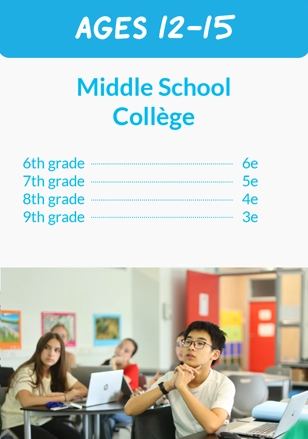
Middle school is a dynamic four-year journey where students discover new subjects, take on greater responsibilities, and seize new opportunities. It culminates in the Diplôme National du Brevet (DNB)—the first major milestone in the French education system, taken at the end of 9th grade. Along the way, students can broaden their horizons by learning an additional language—German or Spanish—and exploring optional subjects such as Latin.
One day, Chloé asked us, “Can we just live at school?”
“After entering Shanghai French School, I feel Anya is really happy, I feel her eyes light up again”
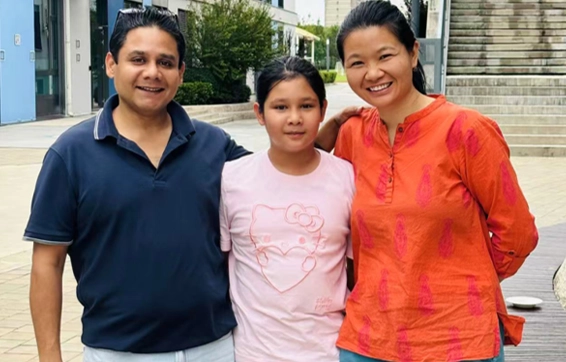
“I was so impressed in the first weeks at school many students helped Zhi-En, he can now learn and grow in an environment more diverse and inclusive”
Classroom & Teaching Organization
Each subject is taught by a specialized teacher in a dedicated classroom, and students move between different classrooms throughout the day. To provide personalized support, every class is led by a homeroom teacher who oversees students’ overall development and progress across all subjects.
While we prioritize the use of books and traditional paper in our curriculum, we also recognize the importance of technology in today’s world. Students use digital tools in subjects like technology and math, and engage in coding activities through class projects and extracurricular workshops.
We also emphasize educating students about the responsible and safe use of screens and social media, ensuring they are equipped to navigate the digital world confidently.
Middle School Diploma: The Brevet
At the end of 9th grade, students take an exam called the Diplôme National du Brevet (DNB). This is the first official exam in the French educational system, marking the end of middle school.The Brevet is not only based on final exams: continuous assessment plays a significant role in the final grade. Students are evaluated throughout the year in all subjects of the curriculum.The Brevet validates the skills learned in middle school and recognizes regular academic work. It also serves as preparation for future exams, such as the High School Baccalaureate.
The Middle School Diploma’s Final Exam
• Mathematics
• Interdisciplinary oral exam
• French
• Sciences (biology, physic-chemistry or tech)
• History-Geography
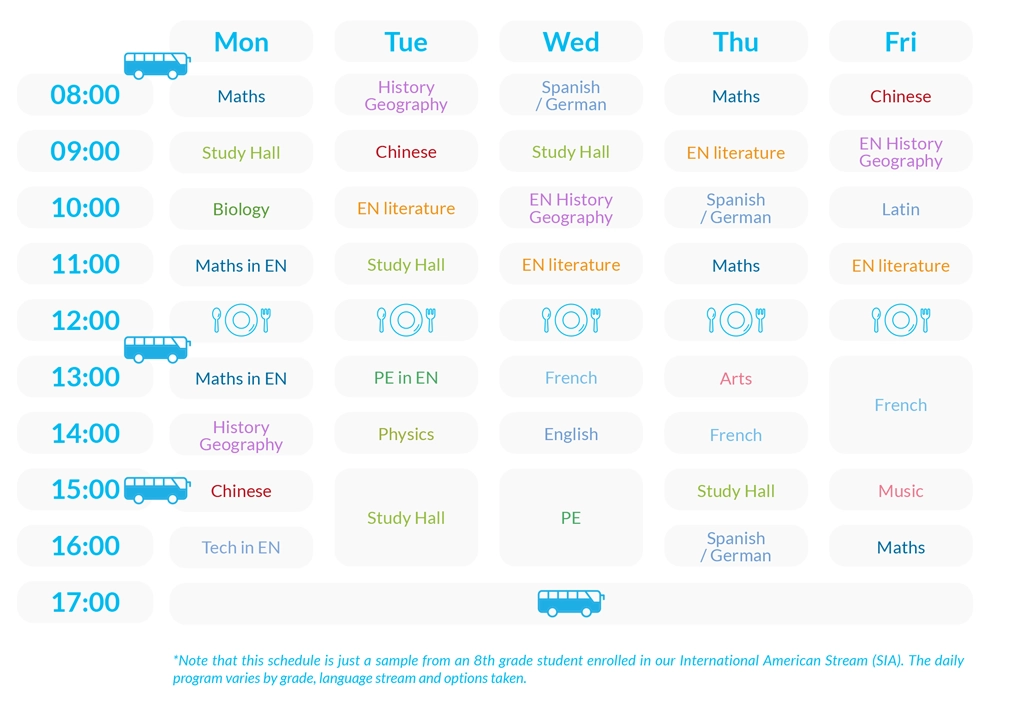
Sample Schedule for Middle School
Our middle school curriculum places a strong emphasis on language learning and sciences while maintaining a well-rounded balance across key academic and creative subjects.
Please note: the distribution may vary depending on the language stream and optional courses such as Latin, offering students the flexibility to personalize their learning path.
• Languages (including French and foreign languages) – 46%
• Mathematics, sciences and technology – 26%
• History & Geography – 11%
• Physical Education (PE) – 9%
• Arts & Music – 6%
Welcome to High School
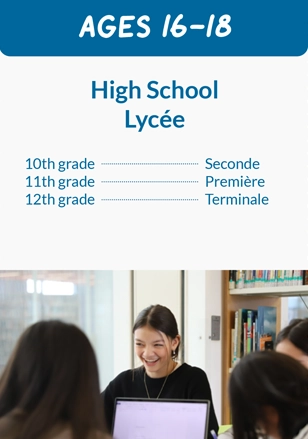
High school in the French system is both challenging and transformative, spanning three years of academic growth and personal development. It prepares students for the rigorous and prestigious French Baccalaureate. The workload intensifies compared to middle school, with higher expectations for independence, critical thinking, and sustained effort both in and outside the classroom.
“Growing here, Sofia and Stefan have become more open, thoughtful, and self-aware”
“For the first couple weeks, Connor really changed, we noticed he was a happier boy and he was studying harder”
Classroom & Teaching Organization
The first year of high school (10th grade) is a general year shared by all students, laying the groundwork across core subjects and allowing them to explore their strengths.
In 11th grade, students must select three specialty subjects based on their interests and future academic goals. These specialties become central to their schedule and learning.
By 12th grade, students narrow their focus to two of the three, which carry a heavier weight both in terms of weekly hours and their impact on the final Baccalaureate results. These choices play a crucial role in university admissions and shape each student’s academic path.
See last year’s 12th graders promotion in our Graduation
Ceremony video:

Apply for admission